Blog machines
Smart Vending Machines: What They Add and What They Cost
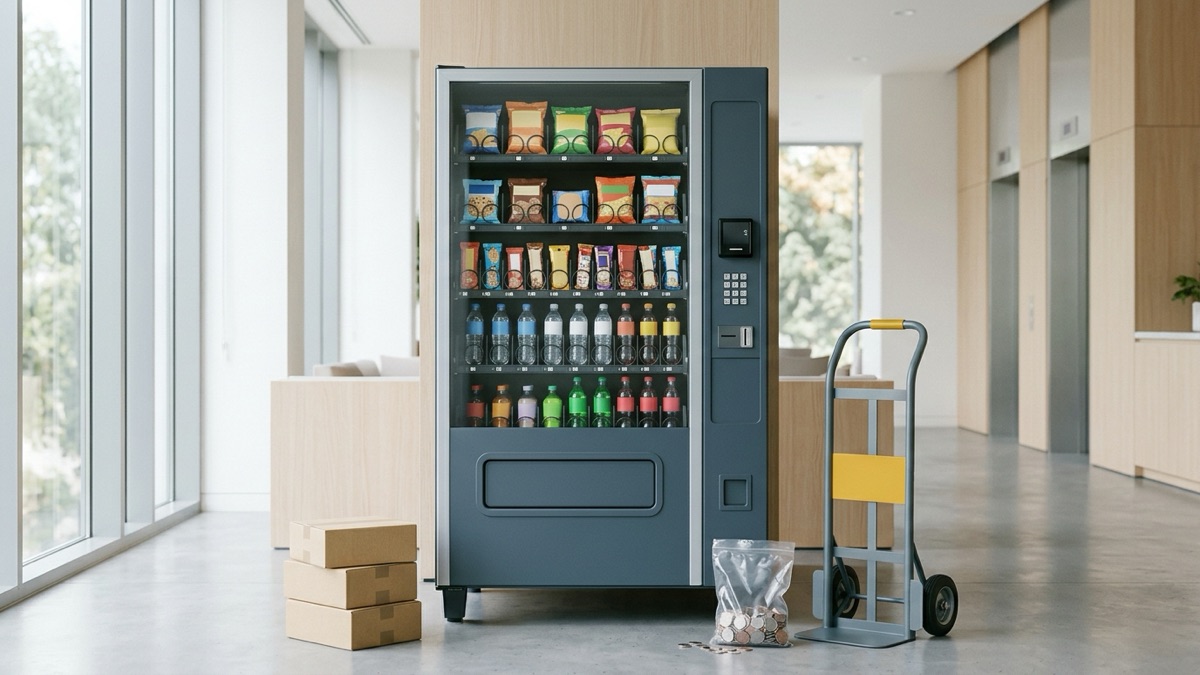
Somewhere between a 1990s snack machine with a coin mech and a glass-fronted cooler that recognizes your face sits the machine most small operators actually need. "Smart" covers all of it, which is why the word confuses more than it explains. This guide takes it apart: what the pieces do, what they cost on real price pages, and when a card reader on a used machine beats a new smart machine.
Quick answer
A smart vending machine takes cards and phones and reports its sales and stock remotely, usually through a cellular card reader or telemetry unit connected over the machine's MDB interface, with data read by DEX or the reader itself. For most small operators, the smart part is a retrofit reader and a dashboard, not a new touchscreen machine.
Key takeaways
- "Smart" mostly means two things: cashless payments and remote sales and inventory data. Everything else is a layer on top.
- MDB is the payment wiring standard that lets a reader talk to the machine; DEX is the data format for reading sales and stock. Most machines built since the late 1990s have MDB.
- A retrofit reader costs a few hundred dollars plus a monthly plan and a transaction rate; new touchscreen or AI machines cost thousands more. Price the monthly fees, not just the hardware.
- Remote stock data changes your route: you visit machines that need it instead of guessing, which is where the money is for a one-to-thirty-machine operator.
- In some states cashless even changes the sales tax treatment, so decide hardware, prices and tax together.
What makes a vending machine "smart"?
Strip the marketing away and a smart machine does four things a plain one cannot.
It takes cards, phones and watches. A cashless reader with a cellular connection accepts tap, chip and mobile wallets. This is the single biggest change in vending in a generation, because the customer who has no cash is no longer a lost sale.
It reports sales remotely. The reader or a separate telemetry unit sends every vend to a dashboard. You know what sold today at the gym without driving there.
It reports stock remotely. With sales data per selection and the pars you entered, the dashboard can tell you which rows are empty or close to it. Some systems add sensors or cameras; most work from the sales count.
It alerts you. A machine that stops reporting, a bill validator that jams, a cooler whose temperature drifts: the dashboard can flag it before a customer complains.
Beyond that come the features that make the brochure photos: touchscreens, promotions, loyalty apps, age verification, camera-based coolers you unlock with a card and walk away from. Those exist and some of them sell well in the right place, but they are not what makes a small operator's business work. The reporting and the reader are.
What are MDB and DEX, and why do they matter?
Two acronyms decide whether a machine can be made smart.
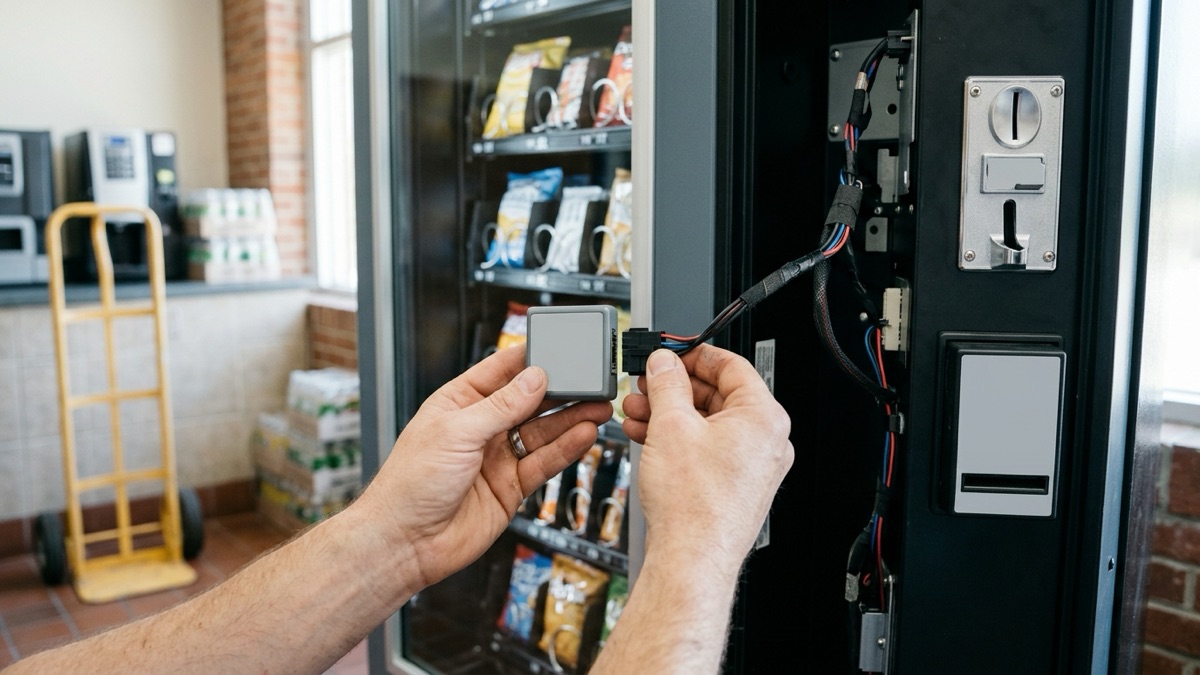
MDB (Multi-Drop Bus) is the standard interface through which a vending machine's controller talks to its payment devices: the coin mech, the bill validator and, importantly, a card reader. If a machine has an MDB harness, a cashless reader can plug into it and tell the machine "credit approved, vend". Most machines built since the late 1990s have MDB. Older machines may have a different interface and may need an adapter or may simply not be worth converting.
DEX (Data Exchange) is the format machines use to report their sales and audit data: counts per selection, cash in, errors. A telemetry device reads DEX from the machine's port and sends it to the dashboard. Many modern card readers do both jobs: they handle payment over MDB and pull sales data over DEX.
For you, the buyer, this turns into one question for any used machine: does it have MDB, and ideally a DEX port? If yes, a reader makes it smart. Our guide to buying a vending machine puts this on the inspection checklist, and used vending machines covers what else to look at.
What does smart hardware cost, dated?
Here are the figures from the companies' own pages and two sellers' listings, all as of November 2026. They are what the pages showed on the day; quotes change.
| Option | What it is | Price shown | Ongoing |
|---|---|---|---|
| Retrofit card reader (Nayax VPOS Touch, US shop) | Cellular cashless reader for an MDB machine | $390 for the reader inside a vending bundle; bundle headlined at $447; US activation $20 per unit | "Cashless, Operations & Inventory" plan $9.99 a month; transaction rate quoted by price band, not printed |
| Retrofit reader kit on subscription (Cantaloupe One) | Card reader kits with software, no upfront cost | $0 upfront | Kits "starting at $19.95 a month" on a 36-month contract; transaction rate not printed |
| Refurbished conventional snack machine (Vending World) | Older machines, many with MDB boards noted in the listing | $1,495 to $3,495 across the listings | Add a reader and plan to make it smart |
| New conventional combo machine (eVending, USI 29-selection) | New snack and drink combo | $5,343 (list $6,084) | Reader and plan as above |
| AI smart cooler (eVending, 365 Retail Markets PicoCooler Vision) | Camera-based unattended cooler | $9,000 | Software and payment fees per the vendor |
Two things to read in that table. First, the gap between making an existing machine smart (a few hundred dollars plus a monthly plan) and buying a smart machine outright (thousands) is enormous, and for a small operator the retrofit delivers most of the business value. Second, the monthly fees and the transaction rate are where the real cost lives over time, and neither company prints a flat transaction rate on its pricing page; both tell you the rate depends on your product prices or your quote. Get it in writing before you buy. Our card reader fees guide shows how a percentage plus cents turns into real money per vend.
VendRoute is made by Viral Labs and is not affiliated with any machine maker, card reader company or software named here.
Heads up
Hardware and plan prices above are quoted from the pages named in the sources on the day we read them and are not offers. Contracts, especially subscriptions on multi-year terms, deserve a careful read of early termination and what happens to the reader if you remove a machine. This is not legal or financial advice.
What does smart data do for a small route?
This is the part the brochures undersell, because it is not a feature, it is a change in how you work.
Without data, you visit on a schedule and hope. With data, you visit the machines that need it. Over a month, that means fewer wasted trips to half-full machines and fewer stockouts at the ones that run hot, which is the difference between a route that pays per hour and one that does not. Our routes guide explains why that matters more than any product choice.
A few concrete uses:
- Pick lists from real counts. The dashboard shows which selections sold since the last visit, so the truck gets loaded from facts. Combine with par levels and the pick list writes itself.
- Catching dead machines fast. A reader that stops reporting on a Tuesday means a machine that has been down since Tuesday, not since whenever you happen to drive past.
- Honest location conversations. When a manager says "nobody uses it", you have the vends per day. When a location is worth a commission increase, you have the numbers for that too.
- Records a buyer will pay for. Reader data is the cleanest sales history a route can have when you sell it. Our vending machine business for sale guide explains how buyers read it.
Try it
The free route planner lets you set a visit interval per machine and prints a weekly sheet. If your reader shows a machine running hot, shorten its interval and let the sheet move it forward.
Does cashless change sales, prices and taxes?
Sales. Operators widely report that adding a reader lifts sales, because the customer with no change is no longer lost and higher price points become possible when nobody has to count quarters. How much it lifts depends on the location, so count before and after; vendor claims about multiples are marketing until your own machine confirms them.
Prices. Cards free you from coin-friendly prices. $1.75 and $2.25 become possible, and a smart machine can change prices from the dashboard instead of with a screwdriver. Our pricing guide covers how to use that without annoying a location.
Taxes. In at least one state, the payment hardware changes the tax rule. New York's Tax Bulletin ST-280 exempts candy, soda, sports drinks and bottled water sold through vending machines at $1.50 or less when the machine takes only cash and coins, and at $2.00 or less when it accepts all forms of payment, with items above those prices taxable. That is one state's rule and it changes; it shows why hardware, prices and the tax question belong in the same decision. Check your own state revenue department's page, and treat this as general information rather than tax advice.
When should you buy a smart machine instead of retrofitting?
Retrofit when the machine is sound and the location is ordinary: a snack or drink machine in an office, a warehouse, a gym, an apartment building. A few hundred dollars and a monthly plan get you cards and data, and the money you did not spend buys another machine for the route. Our refurbished vs new guide runs the total cost both ways.
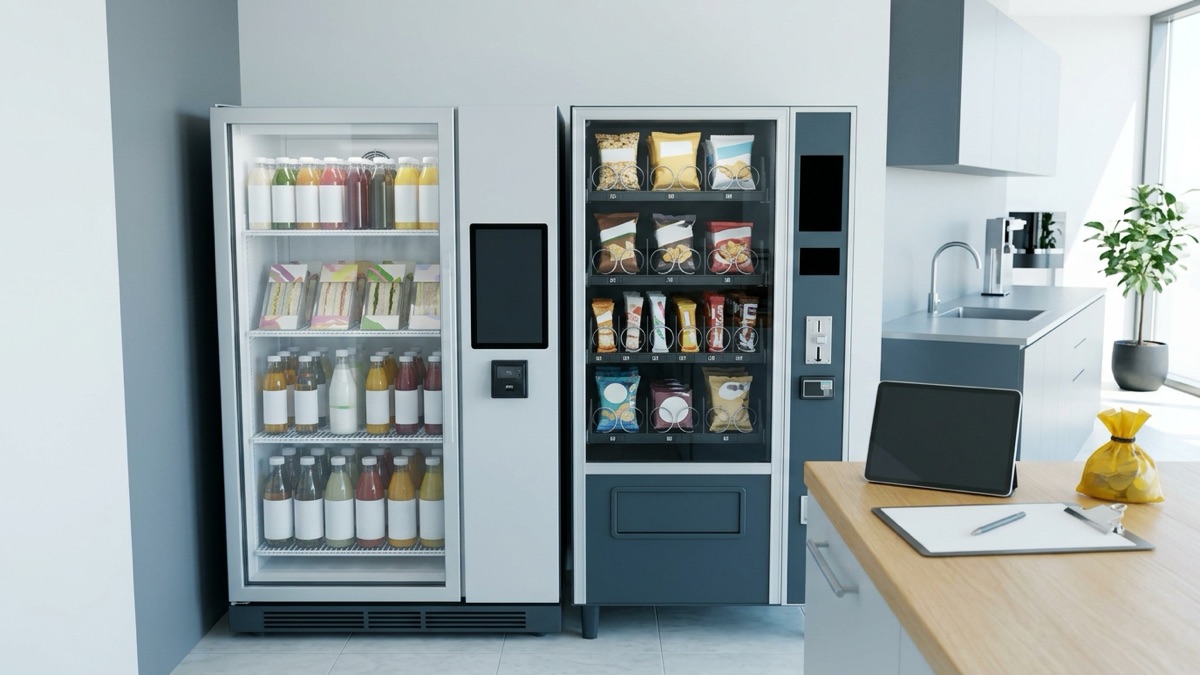
Buy smart when the location demands it. Premium offices and residential buildings sometimes want the look of a new touchscreen machine. Fresh food sells better from a cooler that lets the customer pick up and inspect the item, which is what camera-based smart coolers are for. Age-restricted products need verification hardware. And a micro market, open shelves plus a self-checkout kiosk, is a different business again, for locations with the headcount to carry it; our micro market guide covers when that makes sense for a small operator.
Whatever you buy, price the monthly layer first. A machine is a one-time cost; the reader plan, the software fee and the transaction rate run every month for as long as the machine does, and they decide whether a slow location can afford to be smart at all. Put the fee into the profit calculator next to the location's likely vends and read the break-even line.
The VendRoute app, coming to Android first, is built for operators who walk up to their machines: it will log each visit, hold par levels and show profit per machine, and it is not a telemetry system, so it works with a plain machine as well as a smart one.
The takeaway
A smart vending machine is a machine that takes cards and tells you what it sold. For most small operators that is a cellular reader on an MDB harness and a dashboard, not a touchscreen. Check for MDB before you buy anything used, price the monthly plan and the transaction rate alongside the hardware, and let the data change how you route. Buy the expensive smart machine only when the location, the product or the rules actually need it.
VendRoute guides are written operator to operator and are for general information. The numbers in them are examples with their assumptions stated, not a forecast of what your machines will make. Nothing here is legal, tax or investment advice: check licenses, permits and sales tax on your state and city's own pages and with the IRS, and talk to a licensed professional before you borrow, sign or buy.
Questions operators ask
What is a smart vending machine?
A machine that reports what it sells and takes cards and phones, so the operator can see sales and stock remotely, usually through a cellular card reader or telemetry device plus a web dashboard. Some add touchscreens, cameras or app-based unlocking, but the reporting and the cashless reader are the core.
Can I make an old vending machine smart?
Usually, if it has an MDB payment interface, which most machines built since the late 1990s do. A cellular card reader plugs into the MDB harness and adds cashless payments plus basic sales reporting. Older machines without MDB may need an adapter or are not worth converting.
How much does a smart vending machine cost?
It varies with the machine. As of November 2026, a retrofit card reader listed at a few hundred dollars plus a monthly plan, new conventional machines with a reader ran in the low thousands on sellers' sites, and an AI smart cooler listed at $9,000 on one seller's site. Always price the monthly fees and transaction rates alongside the hardware.
Do smart vending machines sell more?
Taking cards removes the biggest reason a customer walks away with no change in their pocket, and remote stock data lets you avoid empty rows, so many operators see higher sales after adding a reader. How much more depends on the location, so count before and after rather than trusting a vendor's figure.
Where these facts come from
- Nayax US shop: vending bundle (VPOS Touch pricing and monthly plan, read November 2026): shop.nayax.com/vending-bundle.html
- Cantaloupe: Pricing (purchase, finance and Cantaloupe One options, read November 2026): www.cantaloupe.com/pricing/
- Cantaloupe: Cantaloupe One pricing (read November 2026): www.cantaloupe.com/pricing/cantaloupe-one/
- eVending: new vending machines and smart coolers (prices read November 2026): www.evending.com/
- Vending World: Candy and snack machines (refurbished listings, prices read November 2026): vendingworld.com/candy-and-snack-machines
- New York State Department of Taxation and Finance: TB-ST-280, Food and Beverages Sold from Vending Machines: www.tax.ny.gov/pubs_and_bulls/tg_bulletins/st/food_sold_from_vending_machines.ht