Blog locations
Vending Machine Placement: Where Machines Actually Sell

The machine that sells is rarely the one in the busiest spot. It is the one in front of the same people, every day, with nowhere better to go for ten minutes. Placement is the art of finding that pattern, and most beginners get it backwards by chasing foot traffic that never stops walking.
Quick answer
Good vending machine placement means captive, repeating traffic (shifts, residents, members) rather than passers-by, a reason to linger near the machine, no store within a short walk, reliable access and power, and a written agreement with the person who controls the space. Workplaces, apartment laundry rooms and gyms fit that pattern most often.
Key takeaways
- Repeat traffic beats volume. Fifty people who pass a machine twice a day for a year outsell a thousand who pass it once.
- Dwell time sells: break rooms, laundry rooms and waiting areas beat hallways and entrances.
- Check the competition within a two-minute walk. A convenience store next door caps what any machine can do.
- Access, power, and who controls the space decide whether a good location is a workable one.
- Put the deal in writing, keep commission tied to a clear definition of sales, and plan for the day the location closes.
What actually makes a vending machine sell?
Four things, roughly in order of importance.
The same people, every day. A machine sells to habits. The warehouse worker who buys a cold drink at the 2 p.m. break is worth more than any number of visitors who see your machine once. That is why operators love shift workplaces, residential buildings and membership gyms, and why many are lukewarm about tourist spots and malls despite the crowds.
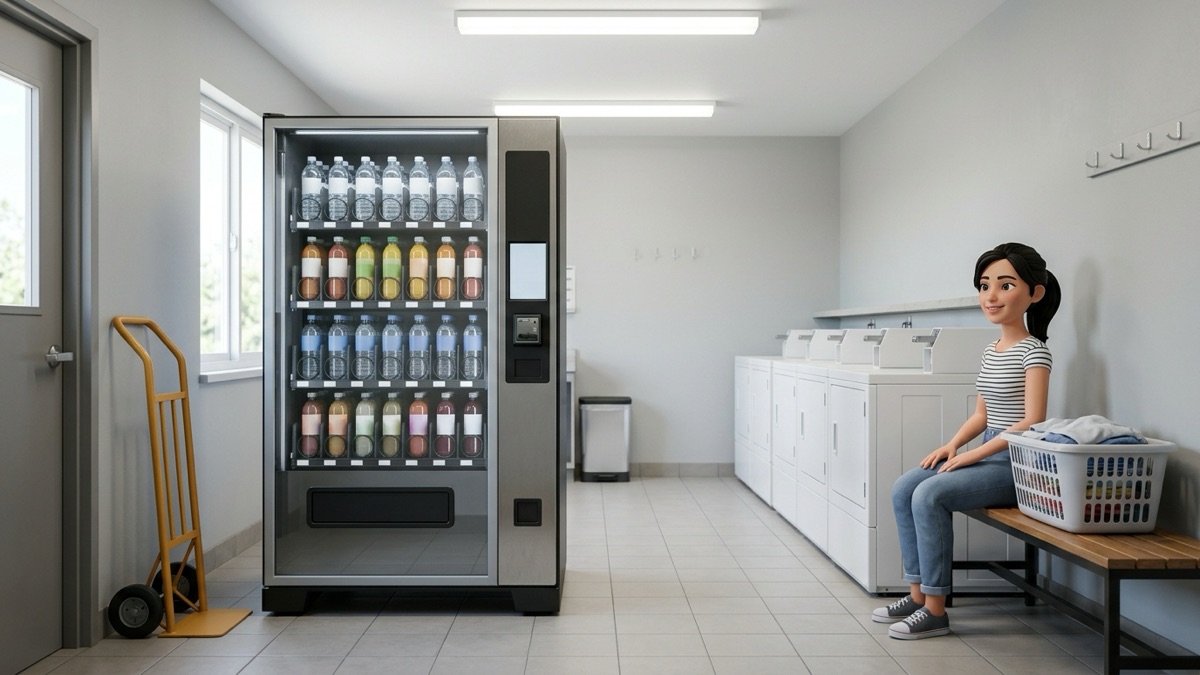
A reason to wait. People buy while they wait: for the dryer to finish, for the break to end, for the shuttle, for the kid's practice to finish. A machine in a laundry room sells because the customer has 40 minutes and a pocket of quarters. A machine in a lobby people cross in eight seconds does not.
No better option nearby. If there is a convenience store or a cafeteria within a short walk, your machine becomes the backup for emergencies. That still sells, but at a fraction of the volume. Walk the block before you pitch.
Hours and access. A machine in a building that is open 24 hours sells on the night shift and on weekends. A machine behind a badge-only door that closes at 5 p.m. sells to the people inside it, and only to them. Neither is wrong, but the numbers are different and so is your restocking schedule: you need to be able to get in when it suits your route, not only when the manager happens to be there.
Everything else, from the lighting to the color of the machine, matters far less than those four.
Which location types sell, and what do they buy?
Here is how the common location types behave, from operators' shared experience rather than a published dataset, so treat it as a starting point for your own counts, not a forecast.
| Location type | Why it sells (or does not) | What tends to move | Watch out for |
|---|---|---|---|
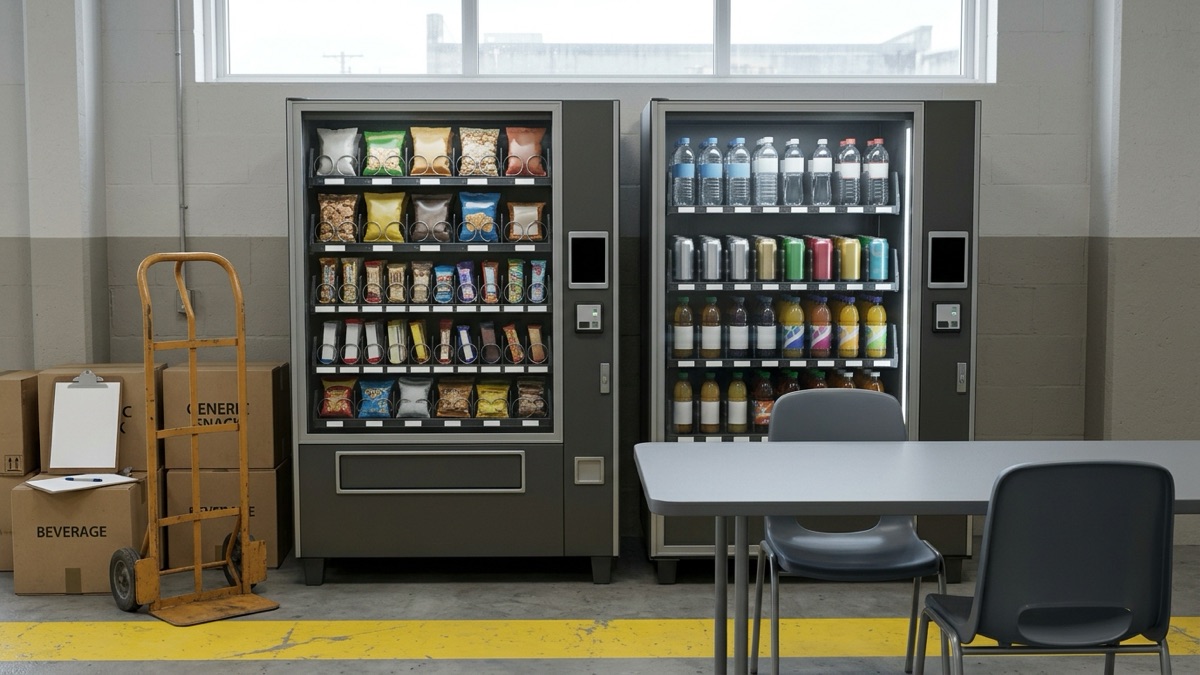
| Warehouses, plants, distribution centers | Shifts, breaks at fixed times, far from stores | Cold drinks first, hearty snacks, candy on night shift | Loading dock access for restocks, badge rules |
| Offices, 40 to 150 people | Daily repeat traffic, dwell in the break room | Drinks, chips, bars; healthier mix sells in some | Hybrid schedules can halve the headcount |
| Apartment laundry rooms and lobbies | Residents wait for machines; evenings and weekends | Drinks, chips, candy; detergent in laundry rooms | Vandalism, property manager turnover |
| Gyms and fitness studios | Members daily, thirsty, in a hurry | Water and sports drinks first, protein and recovery snacks | Short shelf life on premium products, bright lighting shows dust |
| Laundromats | Long dwell, cash culture | Drinks, snacks, candy for kids | Hours, cash security |
| Auto shops and tire centers | Waiting customers plus staff | Drinks, snacks | Small staff counts; waiting room traffic varies |
| Schools and colleges | Large captive populations | Depends heavily on nutrition rules | Procurement processes, summer break |
| Hotels and motels | Guests at odd hours | Drinks, travel snacks | Chains decide centrally, corridor placement |
| Hospitals and clinics | 24-hour staff and visitors | Everything, around the clock | Competitive, often served by large operators |
| Car washes, transit stops, parks | Passers-by, little dwell | Cold drinks in summer | Seasonal, weather, vandalism, power |
The pattern in that table: the top rows have captive repeat traffic and dwell time, the bottom rows have volume without habit. Our vending machine locations hub goes through each type in detail, and the gym and apartment guides cover two of the best ones for a first machine.
Where in the building should the machine go?
Once a location says yes, the spot inside it matters almost as much as the building. A few rules operators learn the hard way:
- Where people pause, not where they pass. The break room wall beats the entrance corridor. The spot by the laundry folding table beats the lobby.
- Visible from the natural path. If you have to know the machine is there, half the building will never find it.
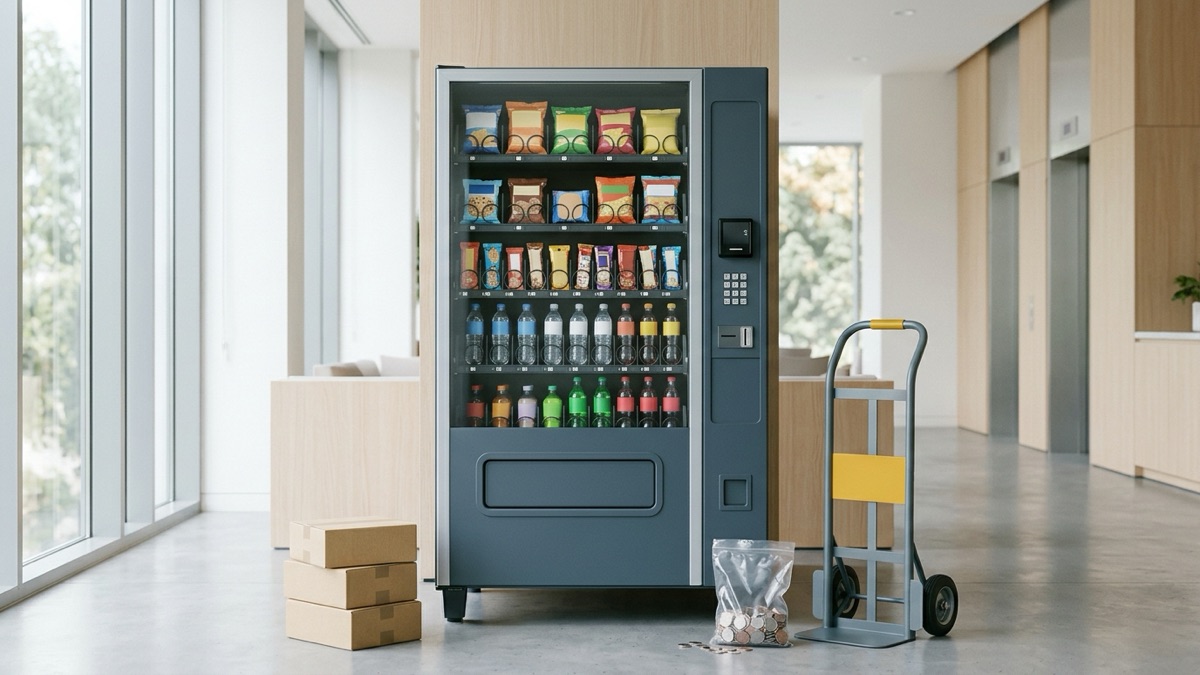
- Power you can rely on. A dedicated outlet, not a shared strip behind a microwave. Cold drink machines and combo units need steady power; an outlet that trips kills a week of sales and the product in the cooler.
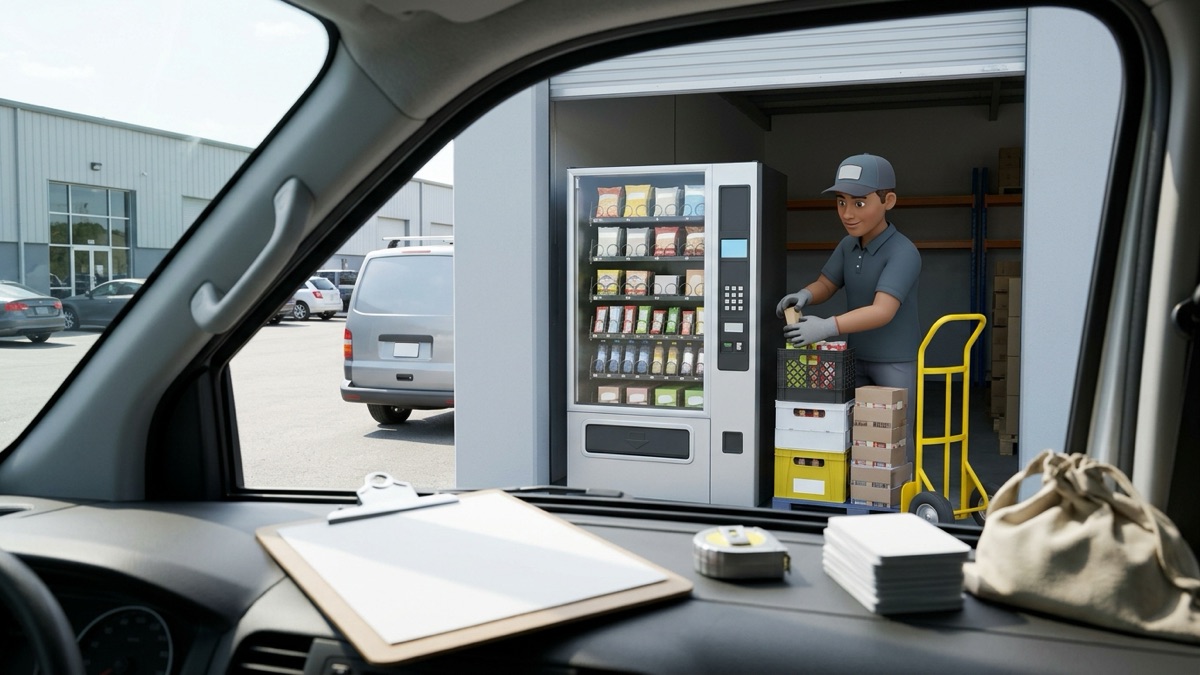
- Room to work. You need the door to swing fully open and a hand truck to reach the machine. Measure the route from the parking spot to the wall before delivery day: steps, door widths, elevator size.
- Light and sight lines. A machine in a dark corner invites tampering; one in view of a front desk or a camera the location already owns rarely has problems.
Tip
Ask the manager where people actually take their breaks, not where the floor plan says they do. The answer is often a different room, a loading dock in summer or a landing with a view, and that is where the machine belongs if power allows.
What should the placement deal say?
A placement agreement does not have to be long, but it has to exist in writing, and it has to cover the handful of things that go wrong. Keep in mind that this is general information, not legal advice; have a professional look over any agreement you did not write.
| Clause | What to pin down |
|---|---|
| Term and renewal | How long, and whether it rolls month to month afterwards |
| Ending it | Who can end the agreement, with how much notice, and how fast you must remove the machine |
| Commission or fee | None, a flat amount, or a percentage; of what (gross, or net of sales tax and card fees); paid when, and how you report it |
| Exclusivity | Whether the location can host another operator's machine next to yours |
| Access | Hours you may service the machine, keys, badges, loading dock rules |
| Power and placement | The location provides the outlet; the agreed spot |
| Ownership and damage | The machine stays yours; who is responsible for vandalism and for damage to floors |
| Insurance | Whether the location wants a certificate of liability insurance |
On commission: many small placements pay nothing, because the location sees the machine as an amenity, and when a percentage is paid, figures commonly reported by operators sit in the 10 to 25 percent range. The agreement decides, not the rumor. The definition matters more than the number. A percentage of gross sales is paid on money that also has to cover sales tax and card processing, so operators prefer a definition that nets those out. Our commission guide and contract guide go through the structures and the clauses.
Heads up
Before placement day, check the official pages for your own state, county and city. The SBA notes that states regulate a broader range of activities than the federal government, that counties and cities may require their own licenses, and that you have to research your own state, county and city rules. Food vending often involves a sales tax registration and sometimes a health permit. This is not legal or tax advice; a licensed professional and the agencies' own pages are.
How does placement change your prices and payments?
Placement and pricing are linked in ways that surprise new operators.
First, the customer base sets the price ceiling. A warehouse on night shift will pay for a cold drink; a school's rules may cap what you can sell at all; an office with a free coffee machine is a snack location, not a drink location.
Second, in some states the tax treatment itself depends on the price and on how the machine takes payment. New York's Tax Bulletin ST-280, for example, exempts candy, soda, sports drinks and bottled water sold through vending machines at $1.50 or less if the machine takes only cash and coins, and at $2.00 or less if it accepts all forms of payment; above those prices the items are taxable. That is one state's rule and it changes, so the state's own page is the one to read, and your state will differ. The point for placement is that price points, payment hardware and tax rules interact, so decide them together for each site rather than copying one machine's setup to the next.
Third, cashless matters more at some placements than others. A gym full of people with a phone and no wallet needs a card reader on day one; a laundromat may run fine on cash for a while. Readers cost money every month: Cantaloupe's pricing page, for example, offers readers for purchase with "monthly service fees apply" and a bundled subscription with no upfront cost on a 36-month contract, as of November 2026. Our how much do vending machines make guide shows how those monthly costs land on a machine's profit, and the profit calculator lets you test a commission or a reader fee against a location's likely sales before you commit.
How do you judge a placement after it is live?
Count. For the first month, track vends per day from the meter or the reader, cash and card collected, and what sold out first. Then ask three questions.
Does the machine sell what you expected? If drinks fly and snacks sit, change the mix and perhaps the machine type. Does the traffic match what the manager told you? Headcounts are often optimistic; hybrid offices are the usual culprit. And does the stop fit your route? A machine that nets well but takes a 40-minute detour may still be a poor placement in the only sense that matters, profit per hour of your time. Our routes guide explains why density beats everything.
Give a slow machine a fair trial of two or three months with real adjustments, then move it. Removal is part of the job, not a failure, and it is why your agreement needs a clean exit clause.
The VendRoute app, coming to Android first, will keep each placement's agreement terms, access notes and par levels next to its visit log, so profit per location is a number you can read rather than a feeling.
The takeaway
Place machines where the same people wait, every day, with no store nearby and a door you can get through on your schedule. Put the deal in writing with a clear definition of commission and a clean exit. Count the first month honestly, fix the mix, and let the stop earn its place on the route.
VendRoute guides are written operator to operator and are for general information. The numbers in them are examples with their assumptions stated, not a forecast of what your machines will make. Nothing here is legal, tax or investment advice: check licenses, permits and sales tax on your state and city's own pages and with the IRS, and talk to a licensed professional before you borrow, sign or buy.
Questions operators ask
What is the best location for a vending machine?
One where the same people pass the machine every day, cannot easily walk to a store, have a reason to wait, and where the building is open to you at sane hours. Workplaces with shifts, apartment laundry rooms and gyms fit that pattern more often than busy public spaces do.
How many people does a location need to support a vending machine?
There is no reliable public figure, and it depends on what you sell and the price. Operators usually look for a steady daily population in the dozens at minimum and check it by asking the manager about headcount and shifts, then watch the machine's real counts for a month.
Do I need permission to place a vending machine?
Yes, always, in writing from whoever controls the space. Depending on your state, county and city you may also need a business license, a sales tax registration and a health permit for food, so check the official pages before placement day.
What should a vending machine placement agreement include?
The term and how it renews, who can end it and with how much notice, what commission or fee is paid and on what definition of sales, exclusivity, access hours, power, and who owns and insures the machine. Keep it short and have a professional review anything you did not write.
Where these facts come from
- New York State Department of Taxation and Finance: TB-ST-280, Food and Beverages Sold from Vending Machines: www.tax.ny.gov/pubs_and_bulls/tg_bulletins/st/food_sold_from_vending_machines.ht
- U.S. Small Business Administration: Apply for licenses and permits: www.sba.gov/business-guide/launch-your-business/apply-licenses-permits
- IRS: Standard mileage rates: www.irs.gov/tax-professionals/standard-mileage-rates
- Cantaloupe: Pricing (purchase, finance and Cantaloupe One options, read November 2026): www.cantaloupe.com/pricing/