Blog routes
How to Build a Vending Machine Route That Pays
A vending machine is not a business. A vending machine route is. One machine in a gym earns pocket money and costs you a drive; twelve machines within twenty minutes of each other, serviced in one loop on a Tuesday, is a job that pays. The difference is not the machines. It is how they sit on the map and on the calendar.
Quick answer
A vending machine route is the loop of machines one person services on a repeating schedule. A route that pays is dense (short drives between stops), has visit intervals set by how fast each machine sells, loads the truck from par levels instead of guesses, and tracks profit per machine so you know which stops to grow, renegotiate or pull.
Key takeaways
- Think in profit per hour of your time, not revenue per machine. A machine across town that nets more can still be a worse stop than a smaller one on the way.
- Density is the whole game: new locations should be chosen for where they sit relative to your other machines, not just for their foot traffic.
- Visit intervals come from what you find in each machine, and par levels tell you what to load before you leave the garage.
- Keep a per-machine record of cash, card, product added and waste from the first visit. It is the only way to know which machines pay, and it is what a buyer will pay for later.
- Buying a route gets you placed machines fast; building one is cheaper and teaches you what a good location looks like. Both need the same records.
What does a vending route actually look like?
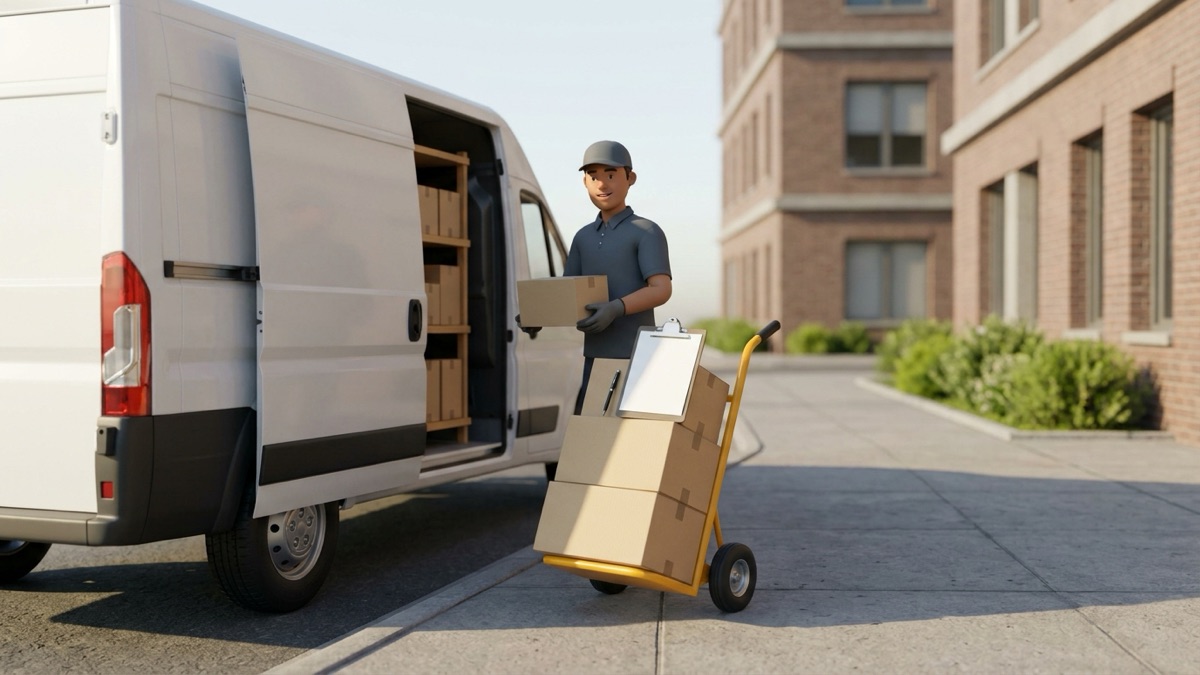
Picture a Tuesday. You load the van from a shelf in the garage at 6:30, drive to a gym lobby before the morning rush is over, swap in a case of drinks and pull two expired bars, count the cash box, then drive four minutes to an apartment laundry room, then nine minutes to an auto body shop's break room, then stop for the pick list at the warehouse club, then two more stops on the way home. You are done by early afternoon. Eight machines, roughly forty miles, one day.
That is a route. The word matters because the loop is where the cost lives. The machine does not care whether it is visited Tuesday or Thursday; your day does. Every hour of driving between stops is an hour nobody paid you for, and the IRS puts a number on the vehicle side: its standard mileage rate for business driving is 76 cents a mile for July to December 2026, up from 70 cents in 2025. Forty miles of route at that rate is about $30 of vehicle cost before you count your time, as of November 2026.
So the first rule of a route that pays: the next machine goes where the route already is.
How dense does a route need to be?
Density is the distance between stops, and it decides more about your profit than any product choice. Two operators with the same twelve machines can have very different businesses if one has them spread over three counties and the other has them in two industrial parks and a strip of apartment complexes.
Here is a simple way to see it. Say a stop takes 25 minutes of work at the machine (restock, count, clean the glass, note the empties). Then compare how much driving sits between stops.
| Route shape | Stops | Work at machines | Driving | Miles | Hours for the day |
|---|---|---|---|---|---|
| Tight: two industrial parks and one apartment cluster | 10 | 4 h 10 min | 1 h 20 min | 32 | about 5.5 |
| Medium: one town, machines on both sides | 10 | 4 h 10 min | 2 h 30 min | 65 | about 6.7 |
| Spread: three towns, "wherever I could get a location" | 10 | 4 h 10 min | 4 h 15 min | 120 | about 8.4 |
These are illustrations with made-up driving times, not measurements. The point is the shape of the problem: the same ten machines take a 5.5-hour day or an 8.4-hour day depending only on where they sit, and the spread route also burns almost four times the miles. If each machine netted the same, the tight route pays roughly 50 percent more per hour, and that is before the extra fuel.
This is why experienced operators turn down locations. A great gym 40 minutes away is a worse business decision than an average office five minutes from your other stops, unless it is the start of a second cluster you intend to fill. Our guide to finding vending machine locations starts the search from your own map for exactly this reason, and vending machine placement explains what makes a site sell once you are there.
How often should each machine be visited?
Not on a weekday. On an interval. A fixed "every Tuesday" schedule feels organized, but it drifts away from reality in both directions: the gym drink rows empty in four days in July and sit half full for nine in January, while the slow office machine gets a visit it did not need every single week.
The interval approach works like this:
- Start short. A new machine gets visited after five to seven days no matter what, because you do not know its pace yet and an empty top row costs you sales and the location's goodwill.
- Count what sold. On every visit, note how many of each item went out. Two or three visits in, you know the machine's weekly pace per slot.
- Set the interval so the fastest seller just lasts. If the best-selling drink row holds 20 and sells 12 a week, a 10-day interval empties it. Either shorten the interval, give that product two rows, or accept the stockout and lengthen the interval because the rest of the machine is slow.
- Adjust from the sheet. When you find a machine fuller or emptier than expected, change the interval that day. Intervals are living numbers.
A route is then the pattern that falls out of all those intervals: on any given working day, the machines due. Our restocking schedule guide goes deeper on starting points by location type.
Try it
The free vending route planner takes a list of machines with their intervals and last visit dates and turns them into a weekly sheet grouped by day, flags the overdue ones, and exports a CSV. No maps, no account, and the list stays in your browser.
What goes in the van? Par levels, not guesses
A par level is the quantity of each product a machine should hold when you walk away from it. It is the single most useful number in route operations, because it turns "what should I bring?" into subtraction: par minus what is left equals what to load.
Set pars per slot from your counts. A row that holds 15 bags of a chip that sells 14 a week on a weekly interval gets a par of 15 and an alternate product queued in case it stalls. A row of a candy bar that sells 3 a week gets a par of 6, not 15, because the rest would sit until the date on the wrapper passes. Pars also tell you what to buy at the wholesaler, which is the step most new operators get wrong: they shop for what looks good, then discover the van is full of things their machines do not need.
Keep the pick list on the same sheet as the visit list. For each stop: slots, pars, what to bring. The par levels guide has a worked table for one 32-selection machine.
Tip
Carry a small "fix-it kit" on every route day: a bill validator cleaning card, spare spiral clips, a roll of refund envelopes, glass cleaner and a notebook. Half the goodwill in this business is fixing the small thing while you are standing there.
What should you record at every stop?
A route only pays if you know which stops pay. That means a record per machine, per visit, from day one:
- Cash collected and card sales since the last visit (the reader dashboard gives the card number).
- Product added, by item, from the pick list.
- Waste pulled: expired, damaged, refunded.
- Time at the stop and, roughly, the drive to it.
- Anything odd: a jammed spiral, a complaint at the front desk, a new competitor machine next door.
Monthly, those lines become gross, cost of goods, commission, fees and net per machine, and a route total that is only interesting as the sum of its parts. Two things come out of this habit. First, you will find that a third of your machines make most of your money and a few quietly lose it after you count the drive. Second, when you one day sell the route, the buyer will pay for these records far more than for the machines. Our vending machine business for sale guide explains how buyers read them.
What does a route cost beyond product?
Fixed costs spread across the loop, and new operators often forget them when they size a route. Every machine on a card reader carries a monthly plan: Nayax's US shop lists its "Cashless, Operations & Inventory" plan at $9.99 a month per reader and the VPOS Touch reader itself at $390, as of November 2026, with the transaction rate quoted separately by price band. Multiply the monthly fee by the machines on the route, add insurance, storage and a share of the vehicle, and that is the money the route has to earn before any vend counts.
Sales tax also follows the route, and it does not care that you think of it as one business. In New York, for example, the state's Tax Bulletin ST-280 tells operators to compute tax separately for each local jurisdiction where machines operate, backing the tax out of tax-included prices with the local rate. A route that crosses a county line has two filings in it. Rules differ by state and city, so your state revenue department's own vending page is the one to read, and our sales tax guide walks through three states' pages. The same goes for licenses: the SBA notes that requirements vary by state, county and city, and that you have to research your own, so a route that spans two cities may need two local permits.
Heads up
None of this is legal or tax advice. Permits, health rules and sales tax on vending differ by state, county and city and they change. Check the official pages for every jurisdiction your route touches, and talk to a licensed professional before you sign a lease on a van or a loan on machines.
Should you buy a route or build one?
Both work. They are different businesses for the first year.
| Building a route | Buying a route | |
|---|---|---|
| Day one | One or two machines, no income yet | Placed machines and cash flow |
| Cost | Machines plus your time finding locations | Machines plus a price for the locations and records |
| Risk | Slow start, locations that say no | Old equipment, agreements that do not transfer, inflated sales claims |
| What you learn | What a good location looks like, from experience | Someone else's choices, which you now service |
| Records | Yours from the first visit | Only as good as the seller kept them |
If you buy, buy records, not stories. Ask for per-machine cash and card history, the written location agreements, the reader accounts and the keys, and walk every machine with the seller before money moves. Our 15 questions before you buy a route is the checklist. If you build, start with two or three machines close together, run them for three months, and only then add the next one on the same loop.
How do you grow a route without breaking it?
Add machines the way you would add stops to a delivery round: where the gap in the day is. If Tuesday's loop has an hour of slack between the gym and the auto shop, the next location you pitch should be in that hour, in that direction. Keep a prospecting list sorted by distance from your existing stops, not by how exciting the location sounds. Say no, politely, to the great site that would add 40 minutes of driving, unless you are ready to make it the seed of a second loop.
Grow intervals before you grow machine count. A route of ten machines that each need a weekly visit is the same workload as twenty machines on two-week intervals; the second route sells more product per hour of your time. Better pars and smarter product mixes stretch intervals, and that is often where the next chunk of profit sits.
The VendRoute app, coming to Android first, will hold your machines on a map with their par levels, log each visit as you make it, and turn those visits into profit per machine and per location.
The takeaway
A route that pays is a loop you can drive in a morning, with machines whose intervals you set from what you find in them, a pick list built from pars, and a record per visit that tells you which stops earn their place. Build toward density, measure your time honestly, and let the numbers, not the excitement of a new location, decide where machine number thirteen goes.
VendRoute guides are written operator to operator and are for general information. The numbers in them are examples with their assumptions stated, not a forecast of what your machines will make. Nothing here is legal, tax or investment advice: check licenses, permits and sales tax on your state and city's own pages and with the IRS, and talk to a licensed professional before you borrow, sign or buy.
Questions operators ask
What is a vending machine route?
A route is the set of machines one person services in a repeating loop: the same machines, in roughly the same order, on a schedule driven by how fast each one sells out. Operators talk about routes rather than machines because the loop is what costs time and fuel.
How many vending machines make a good route?
Enough that a full working day of stops pays for the day, and no more than you can service before the fast sellers run dry. For most solo operators that is a number you discover by timing your stops, not a figure you can look up.
Should I buy an existing vending route or build my own?
Buying gets you placed machines and cash flow on day one but you pay for the locations and inherit old equipment. Building is slower and cheaper and you learn every location. Many operators do both: build a few, then buy a small route nearby once they know what a good location looks like.
How often does a vending route get serviced?
Each machine has its own interval, often weekly for busy sites and every two to three weeks for slow ones. The route is the pattern that comes out of those intervals, so a good route tool schedules by machine, not by a fixed weekday.
Where these facts come from
- IRS: Standard mileage rates: www.irs.gov/tax-professionals/standard-mileage-rates
- New York State Department of Taxation and Finance: TB-ST-280, Food and Beverages Sold from Vending Machines: www.tax.ny.gov/pubs_and_bulls/tg_bulletins/st/food_sold_from_vending_machines.ht
- U.S. Small Business Administration: Apply for licenses and permits: www.sba.gov/business-guide/launch-your-business/apply-licenses-permits
- Nayax US shop: vending bundle (VPOS Touch pricing and monthly plan, read November 2026): shop.nayax.com/vending-bundle.html